Home / Knowledge Center / News
Many vehicle owners treat the cabin air filter as an afterthought, something to replace only when they remember or when a service center reminds them. Some even skip replacement entirely for years, believing that no obvious issues mean no problems. In reality, your cabin air filter is one of the most important components for in-car health, comfort, and long-term vehicle reliability. Especially for drivers of electric vehicles like Tesla Model 3 and Model Y, which rely heavily on efficient HVAC systems and advanced air purification modes, neglecting this small part can lead to serious hidden consequences.
The most direct risk of using an old, clogged cabin air filter is severely reduced air quality inside your car. On the road, your vehicle is constantly exposed to exhaust fumes, PM2.5 particles, road dust, pollen, mold spores, industrial pollutants, and even wildfire smoke. A fresh, high-efficiency cabin filter blocks over 99% of these harmful particles. But once it becomes saturated, it can no longer trap contaminants effectively. Instead, it releases accumulated dust, bacteria, and allergens back into the cabin air you breathe.
For people with allergies, asthma, or sensitive respiratory systems, this can lead to frequent sneezing, itchy eyes, coughing, headaches, and fatigue during even short drives. Children, elderly passengers, and pregnant women are especially vulnerable to poor in-car air quality, as their respiratory and immune systems are more sensitive to airborne irritants. What many drivers mistake for “normal driving tiredness” is often the result of long-term exposure to unfiltered, polluted cabin air.
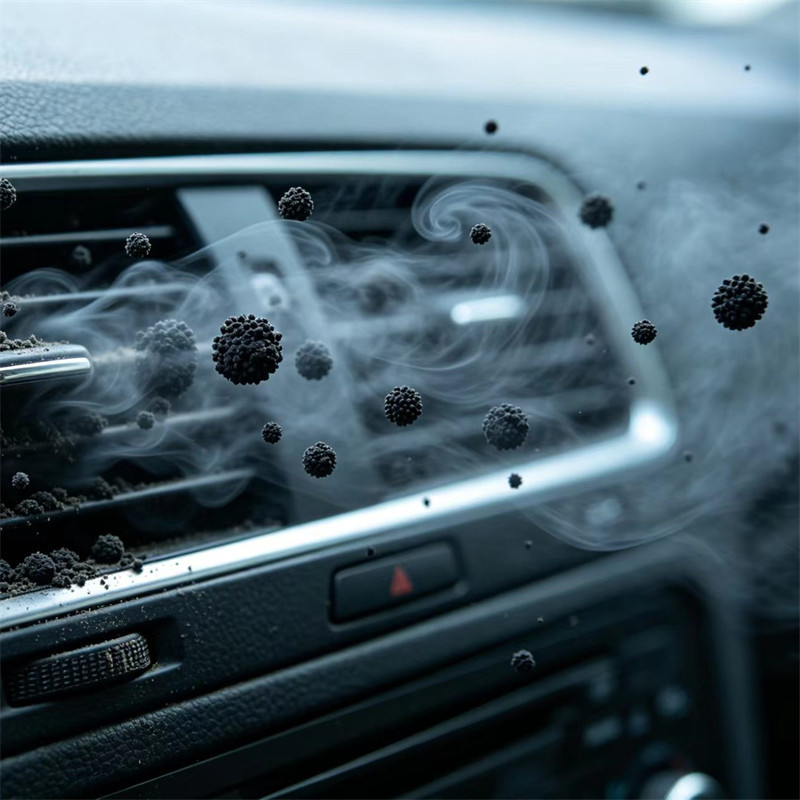
Another major issue caused by neglected cabin filters is unpleasant and unhealthy odors. As dirt, moisture, and organic debris build up on a used filter, it becomes an ideal environment for mold, mildew, and bacteria to grow. Over time, this creates a musty, stale smell that blows through the vents every time you turn on the fan or air conditioning. These mold spores not only smell bad but also directly threaten your respiratory health. In severe cases, mold buildup can spread to the evaporator coil and air ducts, resulting in expensive deep-cleaning services or even component replacement.
Reduced airflow and weakened HVAC performance are also common results of a clogged cabin filter. When the filter is packed with dust and debris, it blocks proper air circulation. You may notice that your air conditioner takes longer to cool the cabin, the heater does not warm up effectively, or the air coming out of the vents feels weak. To compensate, the system automatically increases fan speed and power consumption, creating more noise while wasting energy. For electric vehicles, this extra load can also slightly reduce driving range and put unnecessary stress on electrical components.
Long-term neglect can lead to actual damage to your vehicle’s heating and cooling system. The blower motor must work much harder to push air through a blocked filter, causing accelerated wear and tear. Over months and years, this can lead to premature motor failure, damaged fan blades, or issues with the air conditioning system. Replacing a cabin air filter costs only a small amount, but repairing or replacing a damaged blower motor or AC system can be extremely expensive. In this sense, regular filter replacement is not just a maintenance step—it is a cost-saving investment.
For Tesla drivers in particular, ignoring filter replacement directly reduces the effectiveness of Bioweapon Defense Mode and other advanced air quality features. These intelligent systems are designed to create a safe, sealed cabin environment free from external pollutants. However, they depend entirely on a clean, high-performance filter to function properly. A worn-out filter renders these advanced features nearly useless, defeating the purpose of having premium air protection in the first place.
So how often should you replace your cabin air filter? Under normal driving conditions, replacement every 6–8 months is recommended. If you often drive in urban areas with heavy traffic, dusty environments, regions with high pollen counts, or near construction sites, you should replace it every 4–6 months. Clear warning signs include weak airflow, musty odors from vents, increased fan noise, or worsening allergy symptoms while driving.
Choosing a high-quality replacement filter is equally important. Low-quality generic filters often have poor fitment, thin materials, and insufficient sealing, allowing unfiltered air to leak through gaps. A premium, perfectly fitted HEPA cabin filter with activated carbon provides full protection against particles, gases, and odors while maintaining ideal airflow. It ensures your HVAC system runs smoothly, keeps cabin air fresh and healthy, and extends the service life of your vehicle’s components.
In conclusion, skipping or delaying cabin air filter replacement is a risky habit that threatens your health, reduces driving comfort, and can lead to expensive vehicle repairs. Something as simple and affordable as regular filter replacement can prevent mold growth, maintain strong airflow, preserve advanced air purification features, and protect everyone who rides in your car.
Whether you drive a daily commuter vehicle or a premium electric model like a Tesla, never overlook the importance of clean cabin air. Make filter replacement a regular part of your vehicle maintenance routine, and enjoy safer, healthier, and more comfortable driving every single day.
Our professional team are waiting for your consultation.
 EN
EN